

Skip to content
FREE shipping on orders over $200 🇺🇸 + 🇯🇵
INTERVIEW

Making Excuses to Get Outside with Blair Kemp

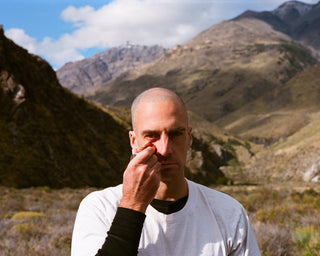
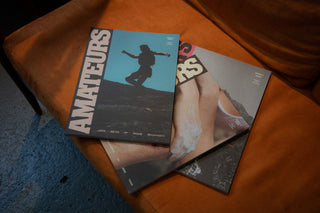
Blair Kemp is the founder of FSP Outdoors, an independent bag and gear project based in New York City, and the publisher of Amateurs, a print magazine using artful imagery and word to explore the relationships between people and the outdoors. We spoke with Blair about DIY culture, learning to sew, designing gear for the activities he loves, and how both projects serve as an excuse to spend more time outside.
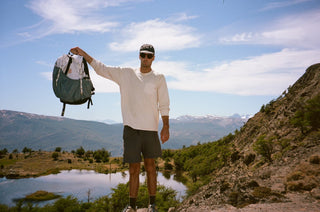
What began as an extension of a lifelong DIY practice of making zines, sewing merchandise for friends' bands, and documenting the communities around him, has evolved into a collection of thoughtfully designed bags built for backpacking, climbing, surfing, and everyday exploration. Today, with most FSP bags made to order, each piece reflects Blair's deeply personal, hands-on approach to making.

Raised in rural Maine and shaped by years spent touring with punk bands, Blair approaches design with practicality, curiosity, and an experimental mindset. Every FSP product begins with a personal need and is refined through use, with function, materials, and aesthetics working together to create gear that feels as good to carry as it does to look at.

Alongside FSP, Blair and his friends publish Amateurs, a print magazine focused on outdoor culture and the people who shape it. We spoke with him about learning to sew, working from a tiny studio in New York, balancing product design with storytelling, and why the best gear often starts as an excuse to spend more time outside.

Tell us a bit about yourself, how'd you find your way to this creative moment in your life?

I grew up in rural Maine, in the mountains close to the Appalachian Trail. As a kid I skied, hiked and fished but once I entered my teens my focus was on skateboarding and getting out of the small town. After high school I spent 7 or 8 years working for a band my friends formed and touring around the US and parts of the world. During this time I learned about community and diy ethics. I learned to sew to make merch for the band and the skate shop I worked at between tours. And I made zines that I would bring on tours and peddle at the skate shop. This all led me to bag making and magazine making. I also slowly got back connected with the outdoors in my early 20s learning to hike, camp and surf. So the bags and zines evolved with my interests from travel and skateboarding to backpacking and outdoor pursuits.

You started by making a duffel bag on your mom’s sewing machine. What was that process like? Did it come naturally, or was there a learning curve? What pulled you into the work?
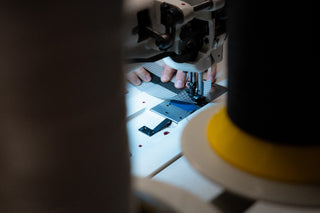
I’m sure there was a learning curve. I think the most important skill you need to learn to sew is patience. You’re going to fuck up over and over and if you can deal with the frustration and continue to take your projects apart and put them back together and fix your machine over and over again you’ll eventually figure it out. I think I just enjoyed the freedom of it, and I still do. You can just put things together and see what happens. It’s all a big puzzle for me to try to bring the picture in my mind to life in a physical object.

Is it right that FSP Outdoors runs out of your Brooklyn apartment? What are the freedoms, and the real constraints, of working at that scale?

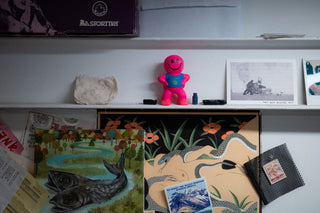
I actually work out of a small space above a photo studio. It is small but much better than working out of my apartment which I did for the first 5 or 6 years of the FSP project. I have a space now that’s about 10x10 feet with a little storage in a closet below the space too. I’m sure my work and workflow would be totally different if I had more space but I’ve never had that luxury so I don’t know if the space constraint is a good or bad thing, only that it shapes the work.

When you’re starting something new, what tends to lead—function, material, form, or something else?

A new bag or piece of gear always starts with a personal need. Whatever activity I’m into, if I feel I need a piece of gear I try to make it. It all starts with function. I make a bag to serve a need. Function, material, and form all are part of the initial equation. They all work together when you have a specific use case and environment that you’re going to be taking a piece of gear into. And once I get the basics covered. Comfort, durability, carry capacity, and joy of use then I can start to play with the aesthetics to further all of those basics and hopefully make something that you feel good wearing while you’re doing the activity the bag is intended for. I always thought the best pair of skate shoes are the ones you look the best in when you look down. So I try to apply that to a bag. If you feel good wearing the bag and looking at yourself wearing the bag you’ll wear it more and enjoy your pursuits with the bag even more.

You’ve said FSP Outdoors is about more than making bags—that it’s a reason to go outside, take trips, and create. Your recent project, Amateurs Magazine, feels like an extension of that. How does the editorial side relate to the craft side of your work?

It’s hard to balance sometimes doing both projects but at the end of the day I have to remember what you said. It's all an excuse to be outside. Whether that’s testing bags or producing stories. It all comes back to time and thought in nature with people I want to spend time with, and that’s what is important to me.

You’ve said bags can become sentimental objects. Is there one that holds that kind of value for you?
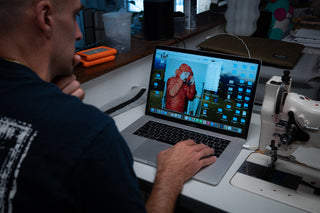
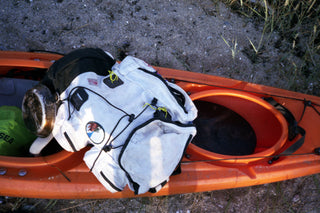
Of course. One of the first bags I ever made myself is this white rucksack. It’s so dirty and worn out but I’ve been on so many trips with it. So much discovery was made with that bag. Learning to camp, and how to carry things. Traveling for the first FSP pop ups in Japan. I don’t use it much anymore for actually camping and traveling, but I try to include it in stories and at events when I can.

“It’s all an excuse to be outside. Whether that’s testing bags or producing stories.”

How has living in New York City shaped the way you make things?

I think it has shaped creativity more subliminally. Living here you’re exposed to so much culture and art all the time. It’s hard to think of a specific example because I’ve always worked in a small space even before I moved to New York. But since I moved here I’ve worked in the photo industry and have been exposed to so much more in the art world so I’d imagine all that comes into the project in ways I don’t even realize. Also doing Amateurs now I’m so much deeper in the outdoor industry so I really pay attention to what brands are doing. All of that shapes what I do with FSP and what I don’t do with FSP. Luckily I have other forms of income so I can be as free with FSP as I like and not worry about what sells crap to pay rent.

What part of running FSP energizes you most? What part drains you?
It keeps me moving. If I want to make climbing bags I have to test climbing bags so I have to climb. That’s probably not the mindset everyone has but it’s the only way I know how to do it. The most draining part is keeping up with the website and social media stuff. I want it to always feel fresh and new but that has been slipping away from me in the past few years. I need to find a way to reshape the online aspects of the business to make it feel special. Recently all my stock online has been sold out because I have been busy sewing bags for people that email me asking when things will be back in stock. It’s nice to have this flow of requests and I always say yes to people on email. It’s nice to have this more personal relationship with every person I make a bag for but I’d imagine from an outside perspective it just seems like I’m not making anything because I’m not doing new releases online.

FSP has found an audience across outdoor, streetwear, and design communities. Did that crossover happen intentionally, or did it surprise you?

I honestly don’t know who buys the bags or why they buy them. I just hope that I’m providing something that some people out there feel is for them, and makes them feel good in their outdoor pursuits. I just make things I’d want for myself and if other people can find some connection to that it feels extra special.

What are you working on right now, or thinking about next?
We just finished the new issue of Amateurs. It’s at the printer now. I’ve been remaking the FSP site to be more in the vision of how I see the brand now, and how I want to present it online. I have a few sewing projects in the works too. Mostly small fabric changes and updates to existing styles. I think I’m pretty happy with the current line up of bags, and over the next few years will just be dialing in those styles and improving them as I go. I have a backpacking bag, climbing bag, fastpacking bag, and surfing tote. So until I dive into some other new outdoor activity I’ll just be dialing in that line up. Maybe making some more shirts and little projects out of the scraps and all that same stuff I normally do too.

We're so grateful to Blair for sharing his story and spending a bit of quality time in the studio with us. You can learn more about FSP Outdoors at fspoutdoors.com and follow along with Blair's work on Instagram @fsp_outdoors. You can also find Amateurs Magazine at amateursmagazine.com.

Published

Interview

Jonathan Rahmani

Images

Blair Kemp, Jonathan Rahmani
SANPO SHOP

Products with purpose

Shop items we use from brands we love, along with a few creations of our own. Quantities are limited.