

Skip to content
FREE shipping on orders over $200 🇺🇸 + 🇯🇵
INTERVIEW

Fiber & Form with Clara Knitwear

Made by hand, informed by landscape, a softer approach to outdoor clothing. Clara Everest’s work considers the entire lifecycle of each garment.
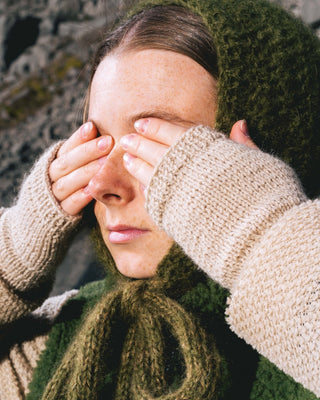
Clara Knitwear is guided by time spent outdoors and a passion for making by hand. Founded by Clara Everest, the work draws from shifting conditions, quiet landscapes, and simply being outside, she translates these components into garments that feel both practical and personal. Using traditional techniques like knitting and crochet, each piece is developed slowly, with careful attention to material, durability, and how it will be worn over time.

There’s a clear balance in the work. Pieces are designed to function in the elements while still feeling considered and lived-in, something that moves easily between outdoor use and everyday life. Clara looks to natural fibers with a long history of use, reworking them into forms that feel relevant now.

The result are garments that are made to be worn often, shaped by use, and kept for years. We spoke with Clara about process, place, and the slower rhythms that guide her practice.

Hi Clara, could you introduce yourself and share a bit about Clara Knitwear?

Hey, I’m Clara Everest, the founder and maker behind Clara Knitwear. The brand is shaped by two things I’ve always been inspired by: spending time outdoors and creating physical things with my hands.

Clara Knitwear began quite naturally from that intersection, as a way of making pieces that felt considered, functional and connected to the environments I spend time in. Based in England, the brand is influenced by changing seasons, wild landscapes and a slower way of living.

Each piece is designed and made with intention. It’s an ongoing process of exploring how clothing can feel both practical and personal, something that fits into everyday life but also holds a sense of longevity.

Your work and brand feels deeply connected to the outdoors. When did that relationship first begin to shape what you make?
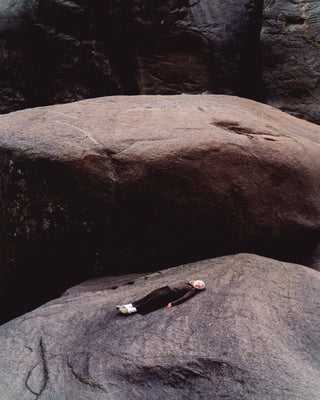
Spending more time outdoors in my early twenties really shifted my perspective. I became more aware of what I was wearing, not just in terms of function, but also the impact it was having.

There felt like a gap for clothing that could exist in the outdoors without working against it. That’s where the idea began: to create garments that people can wear in the elements, that feel good, work well, and leave as little trace as possible.

I’ve always been interested in design in a broad sense, so it was important that the pieces didn’t just perform, they also had to feel curated.

How do you approach balancing the space between traditional craft and contemporary outdoor wear?

For a long time, outdoor clothing has been dominated by synthetic materials, but if you look back at early explorers and mountaineers, everything they wore was wool. It worked then, and it still works now.

Wool regulates temperature incredibly well, and it feels like a natural solution that we’ve moved away from. For me, it’s about reconnecting with those materials and methods, and rethinking them in a more modern way.

So the balance comes from using traditional techniques and fibres, but applying them to designs that feel relevant now. Pieces that are rooted in the past, but made for how we live today. We enjoy styling these pieces with more ‘current’ technical- clothing, to show that knitwear still has a place in the modern scene.

You work with knitting and crochet, techniques that carry a long history. What draws you to these slower, more tactile processes?

I’ve always loved making things by hand. There’s something grounding about working in a tactile way, both in the process and in the finished piece. In a fast-paced world where things can feel quite fleeting, it’s nice to make something that is tangible and long lasting.

What I’m most drawn to is the pace of it. Knitting and crochet are slow by nature, and although cliche, they do force you to slow down with them. As a person who finds it hard to sit still in general, it’s a great meditative process for me.

My grandma taught me to knit, and I quickly became absorbed in it. Crochet followed not long after, and since then I’ve loved creating hand-made pieces with personality. Watching a piece slowly take shape over days or weeks keeps you closely connected to what you’re making.

Your pieces feel considered, both in material and form. How do you approach choosing fibers and thinking about longevity?

Sustainability has been important to me for a long time, as a way of living and making decisions.

I work with natural and recycled fibres, choosing materials that have a lower impact and will last well over time. Wool in particular is interesting in this way. It doesn’t degrade with wear, instead it evolves. Over time it softens and shapes itself around how it’s used, which adds to its longevity rather than taking away from it.

Because each piece takes hours to make, you develop a real understanding of the material - how it behaves, how it feels and how it holds its shape.

There’s also a lot of room to explore. The UK alone has hundreds of different sheep breeds, all producing wool with their own unique qualities. No two fibres are exactly the same, and that variation is something I really enjoy working with.

There’s a sense that your garments are made to be lived in. What kinds of moments or environments do you imagine your pieces becoming part of?
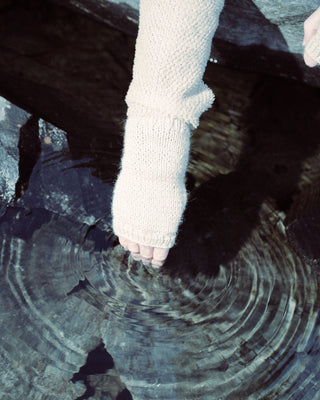
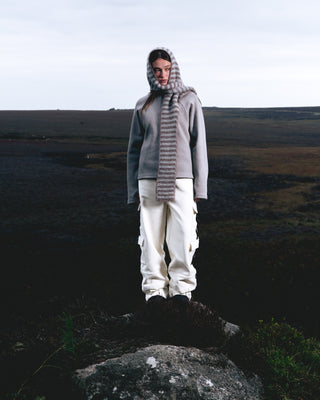
I like the idea of pieces becoming part of someone’s everyday rhythm. Something they reach for without thinking.

They are just as much for slower moments as they are for outdoor adventures. Sitting outside in the evening, or layering up at home. They’re designed to be versatile, to move between environments and ways of living.

The pieces are intended to work as accents. Something people can style in their own way, whether that’s in a more technical way or as part of everyday wear. No two pieces are exactly the same, and I like to think the way they’re worn becomes just as individual.

I like the idea of pieces becoming part of someone’s everyday rhythm. Something they reach for without thinking.

Can you walk us through your process, from initial idea to finished piece? Where do things tend to shift or evolve along the way?

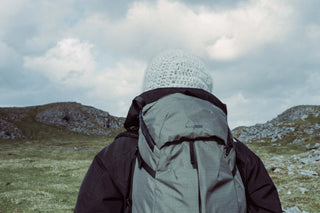
Most ideas start quite simply, usually from a real moment. Walking through places like the Bannau Brycheiniog (Brecon Beacons) National Park, or on the South Coast of England, with the wind in your face and shifting conditions, often sparks ideas. I like to think about what would make that experience more comfortable, without over complicating it. My designs then tend to be quite simple and traditional, to battle the elements, and become a welcome addition to your outdoor wardrobe.

From there, I’ll think about materials, the weight, the fibre, the colour, and begin exploring different stitches that might suit the idea. The process is quite fluid. I’ll have a rough direction, but a lot evolves as I go.

When I’m designing, I tend to work in a more focused way, but once a piece is developed and I’m making variations, the rhythm shifts. It becomes a slower, more repetitive process at that stage, but one that’s still really satisfying.

Your work and the way it’s presented feels inspired by the landscapes surrounding you. Are there specific places that continue to influence your designs?
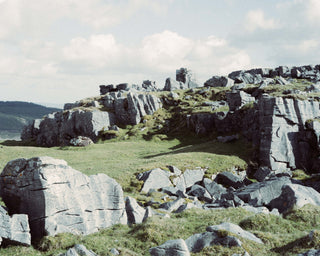
Norway has been a big source of inspiration over the past few years as I have spent a fair bit of time there, particularly in the Arctic circle. The landscapes are quite extreme, and the conditions push you to think more carefully about what you wear.

That relationship with place also feeds into how the brand is presented. The visual side of Clara Knitwear is something I develop closely with my partner, Eliot Adams, a photographer. Together, we think about how the pieces sit within a landscape, not just as clothing, but as part of an environment. That often feeds back into the designs themselves, especially through colour and how a piece feels in a particular setting.

Sustainability is often discussed in fashion and outdoor clothing. How do you personally define what it means to make responsibly?

For me, it comes down to being conscious of materials, of process, and of scale. Working slowly and producing in small quantities allows for more care and less waste. It’s not about being perfect, but about making better decisions where possible and creating pieces that are made to last.

By working with natural and recycled fibres, and making each piece by hand, I’m able to keep things intentional. I don’t produce more than I need to, and the materials I use are chosen so that pieces can last for years of wear and return naturally to the environment over time once the item’s life has come to an end in decades to come.

Ultimately, it’s about creating pieces that are worn often, cared for, and passed on. That sense of longevity feels like an important part of making responsibly.

What does a typical day look like for you when you’re working? Are there rhythms or rituals that help you stay connected to your craft? What are you currently curious about or exploring in your work right now?
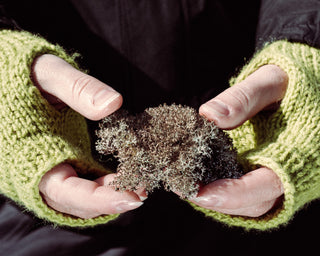
Alongside Clara Knitwear, I work as a graphic designer, so the making tends to fit around that, often in the mornings, evenings or slower pockets of time. In a way, that pace has shaped the brand itself. It’s grown slowly and in a considered way, which feels important.

A lot of time is spent making, which is a steady and hands-on process, alongside everything else that comes with running a small brand. If I can, I like to work outside, just to stay connected to the environment that inspires the work.

My background in design naturally feeds into the process, especially in how ideas develop and how the pieces are eventually presented. The visual side of the brand continues to evolve alongside the making, shaping how the pieces are experienced and understood in the modern outdoor scene. The way they’re styled and documented is a collaborative process with myself and Eliot, and a big part of how Clara Knitwear is expressed.

At the moment, I’m exploring new materials, stitch techniques and colour combinations, and starting to think about the next winter collection, which feels like an opportunity to push things further and have a bit more freedom with the designs.

In a product landscape often defined by speed and performance, Clara Knitwear takes a different approach. In working with natural materials, traditional techniques, and a slower pace, Clara creates pieces that feel considered, durable, and personal.

Thanks Clara for taking time to share your story and process with us. Be sure to check out Clara Knitwear at www.claraknitwear.com and follow them on Instagram at @claraknitwear

Photos by Eliot Adams

Published

Interview

Jonathan Rahmani

Images

Eliot Adams
SANPO SHOP

Products with purpose

Shop items we use from brands we love, along with a few creations of our own. Quantities are limited.