

Skip to content
FREE shipping on orders over $200 🇺🇸 + 🇯🇵
Interview

Street Meets Stream with Masakazu Fukuyama of Toned Trout

From the headwaters of the Tone River in Minakami, Masakazu Fukuyama has built Toned Trout around the relationship between mountain stream fishing, style, and everyday life. In this interview he shares his perspective on creativity, environment, and finding clarity through simplicity.
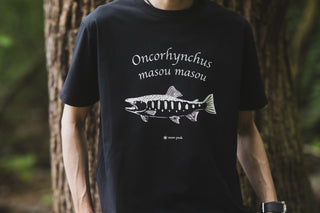
For Masakazu Fukuyama, mountain stream fishing is not separate from design, style, or daily life. From his home in Minakami, Gunma, where rivers and mountains shape the rhythm of each season, his approach to Toned Trout has grown from a background rooted equally in snowboarding, street culture, and simply spending time outdoors.

Since founding Toned Trout in 2018, Fukuyama has explored the space between urban expression and life in nature, creating garments and gear that balance functionality with individuality. Rather than forcing those worlds together, his work reflects the belief that the connection already exists.

We spoke with Fukuyama about Minakami, fishing, creativity, collaboration, and how stripping away distraction has helped him focus more clearly on what matters.

First: Introduce yourself and tell us about Toned Trout — what is it about, and what did you set out to build when you started it in 2018?

My name is Masakazu Fukuyama, and I am based in Minakami, Gunma. Toned Trout is built around the concept of connecting urban life and mountain stream fishing.

My background is in snowboarding, rooted in street culture and fashion, and I wanted to express that same sensibility within the natural world without separating it from mountain stream fishing. When I started in 2018, fishing and fashion still felt very separate, usually focused on either function or style. I wanted to create something where both could naturally coexist.

You had a decade-long career as a professional snowboarder — Nike contracts, national championships — before pivoting to fashion and fishing. How did those years shape the way you approach creativity and building a brand?

Snowboarding taught me the importance of having a personal style. In that world, it is not just about technique, but about expression that is unique to the individual, and that mindset strongly influences my work today.

The sense of playing in nature has also always remained consistent. As a brand, I prioritize my own axis over trends, and that comes directly from those years.

You moved from Nara to Minakami, one of the most remote and mountainous corners of Gunma. What drew you there, and how has living at the headwaters of the Tone River shaped who you’ve become?

I moved from Nara to Tokyo, and then to the mountains near Minakami. There was a lot to gain in the city, but I began to question what was truly necessary for me, which led me to choose a life in nature.

In Minakami, the mountains and rivers are close, and daily life is fully integrated with the field. Living at the headwaters of the Tone River, I constantly feel the movement of water and the seasonal changes. This has influenced not only my mountain stream fishing, but also my way of thinking and values.

Toned Trout x Snow Peak SS25

Toned Trout x Snow Peak SS25

Toned Trout is built around the idea of “connecting urban life and fishing activity.” What does that connection look like in practice — is there a tension between those two worlds, or do they naturally want to come together?

Rather than forcing a connection, I feel it is about making something visible that already exists. It is about bringing urban sensibility and style into the field, while translating what I experience in nature back into urban expression.

That back-and-forth is the essence of Toned Trout. There is tension between the two, but that tension is what makes it interesting.

The Tone River system runs through your backyard. How have fishing those specific waters — the valleys, the seasons, the species — influenced the gear and garments you design?

It has a very direct influence. Changes in water levels, temperature, and terrain, real field conditions, are reflected in the design.

Of course, functionality like mobility, lightness, and waterproofing is important, but I also think about how time is spent in that environment. It is gear for mountain stream fishing, but it also needs to stand as a style.

You also run Man of Moods (Mountain of Moods) alongside Toned Trout. How do those two projects relate to each other — do they feed the same creative impulse, or are they expressions of entirely different parts of who you are?
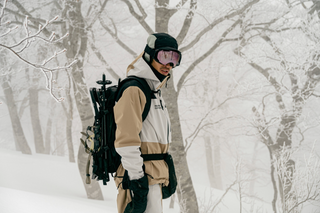
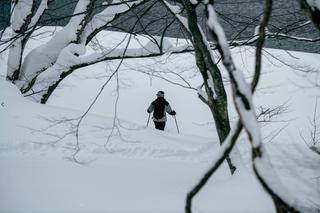
Simply put, they serve different roles. Toned Trout is centered around mountain stream fishing, while M of M is focused on winter sports, especially snowboarding, creating outdoor wear based on that background.

Both come from the same roots, but each expresses itself differently depending on the field.

Your collaborations with Snow Peak have brought Toned Trout to a much wider audience. What does it look like to work with a brand of that scale while staying true to a very specific, place-based vision?

Working with a large brand makes it even more important to stay clear about my own axis. As a smaller player, I can explore deeper, more core aspects that larger companies often cannot.

Through collaboration, I try to bring movements and perspectives that do not exist within Snow Peak itself. Even if the projects are not large in scale, I believe they allow for a more essential and deeper expression.

Fly fishing demands a particular kind of patience and attunement — reading water, weather, the behaviour of fish. How has that practice changed the way you move through the world more generally?

It taught me the importance of waiting and reading the flow. Accepting what cannot be controlled, and choosing the best option within that, is a mindset that carries directly into daily life and work.

You taught yourself fashion — no design school, just self-directed study. What did that path give you that a more conventional training might not have?

Not being bound by fixed rules is a strength. There were many detours, but through that I developed my own interpretation and methods. That ultimately led to originality.

Minakami is your home and your landscape. What does it give you that you couldn’t find anywhere else — and what would you lose if you left?
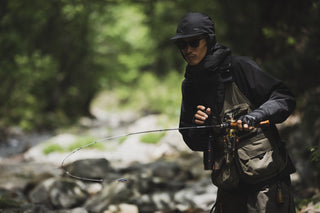
What Minakami gives me is a close relationship with nature and an environment where unnecessary things are stripped away. In terms of “losing something,” it has actually been a benefit for me.

In Tokyo, there was a lot to gain, but also a lot of unnecessary information, relationships, and distractions. People are easily influenced by short-term information and immediate gains, so being able to automatically and physically cut that off has been important.

Now that I am 50, I believe having the courage to lose things is essential. By stripping things away, I can focus more on what truly matters.

Published

Interview

Jonathan Rahmani

Photos

Masakazu Fukuyama
SANPO SHOP

Products with purpose

Shop items we use from brands we love, along with a few creations of our own. Quantities are limited.